
_______
_______
For more poetry
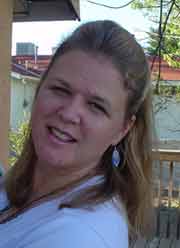
Kimberly Kobyl Williams
from Macando
desde los viejos tiempos de Netzahualcoyotl,
——-
que desde los remotos momentos de su vida
vive de luz, de fuego, de perfume, de amor,
la América del gran Moctezuma, del Inca,
la América fragante de Cristóbal Colón,
la América católica, la América Española. . .
. . .esa América
que tiembla de huracanes y que vive de Amor,
hombres de ojos sajones y alma bárbara, vive.
Y sueña. Y ama, y vibra; y es la hija del Sol.
—Rubén Darío, de “A Roosevelt”
But our America, which has had poets
ever since the days of Netzahualcoyotl,
——-
which from the remotest stages of its life
has lived on light, fire, fragrance, love,
the America of the great Moctezuma, of the Inca,
the sweet-smelling America of Christopher Columbus,
Catholic America, Spanish America. . .
. . .that America
which is shaken by hurricanes and lives on Love:
it is alive, O man of Anglo-Saxon eyes and barbarous soul.
And it dreams. And it loves, and stirs; and is the daughter of the Sun.
—Rubén Darío, from “To Roosevelt,” Stanley Appelbaum, trans.
Mentirosa
We sit on the patio,
afuera,
surrounded by the quilted, green Andes,
the quiet mountains that don’t loom.
As if they know they exist in the Third
World, they sit resigned
inside their massive
beauty.
Paty’s short, quick fingers brush
and then braid
my hair.
She is silent,
and I am somehow
rambling on in Spanish.
I say,
Cuando regrasámos a Estados Unidos
vamos a mandar por tí.
Her brown fingers
pull my blonde plait tighter,
briefly jerking my scalp.
She finally says,
No vas a olvidarnos?
And I say,
Seguro que no.
She fastens the end of my braid
in silence.
This gesture ends
our morning ritual.
I turn my head to face her.
She looks past me
towards the mountains,
trying hard to smile.
In the National Museum of Archaeology and Ethnography, Guatemala City
The mother crouches,
gazing over the matching skulls
that lie side by side at her feet.
Her hollow eye sockets and hanging upper jaw
still display grief,
even disbelief.
The twins passed rapidly
through this life,
their chance to avoid
much suffering—
their pelvises, the size of lima beans,
their tibias, the size of toothpicks.
The mother continues to guard
her children
as she couldn’t do in this life
once they left her body.
But an eternity on display
isn’t long enough to alleviate
some kinds of pain.
On the Way to Tecpán
A sweet breeze blows coolness
through the windows.
We climb the highlands slowly
in our fancy gringo bus.
The rainy season’s greenness
makes the vista picturesque:
farmers tending corn, snap peas, radishes,
women bending in boldly colored skirts
hiked up around their knees.
Pine trees and layers of shadowy mountains
drop down behind the fincas.
In the distance, the farmers look small,
and one carries a plastic jug over his back;
he sprays row after row of vegetable tops.
He wears no mask or gloves
as the pesticide mists around him.
Months later, I don’t remember
arriving in Tecpán.
I don’t even remember Tecpán;
I have only the notes in my journal.
But back at home, I look down
at my plate
and remember so clearly that moment
somewhere between Tecpán and where
we were coming from:
the breeze, the light sun
of late afternoon,
the fertile landscape stretching into the distance,
the Guatemalan farmer’s hand extended,
and the yellowed jug attached squarely
to his back—
his dark hand dousing
the vegetables evenly,
blessing the crop with a holy water
that will make tumors blossom
in his brain.
July 3rd, Copán
Dappled light bends
through the cedar trees
in bloom.
Blossoms rain
through the forest.
A heavy scent,
like someone cooking beans,
hangs in the air. One ant carries
a small yellow blossom
across its back—
a petal floating
just above the earth.
Chiapas Love Letter
“In central México, the warriors’ souls were believed to transform into butterflies at dusk.” —Toniná Tour Guide
Love, there are butterflies everywhere,
delicately spinning about the ruins;
every step in the long grass
sends them skyward.
Your presence has followed me all day—
across the mountains
and over the ruins,
and in these words
which cease to leave.
Today, Chiapas ensnared my heart,
just like you warned me it would.
At Toniná clouds gather in the distance
while the sun burns my skin.
The top of the ruins guard an expanse
that stretches quilt-like across an emerald bed
and ends at mountains
and shadows of more mountains
that hide each other infinitely.
In the late afternoon at Agua Azul,
the water churns a dirty green.
I walk mud paths, beaten flat
by the tourists and vendors.
Mist hovers near the cascades,
and someone has tucked sugar cane pieces
in the Y of a baby ceiba tree;
they look like elephant teeth covered in ants.
Love, this morning you were sleeping,
and I recognized in your strong cheeks and folded eyes
the thousands of masks that mark the Ruta Maya,
the frozen faces found in museums
and in textbooks. And there you were, stretched out,
so deeply brown and peaceful,
so easy for me to reach, so ready
for me to touch.
This love is brief,
I know,
but at this moment it is everywhere
and still expanding—
in your black hair and almond eyes,
in your deep lips,
in the mountains of maize, and in the restless flight
of the butterflies—
impatiently filling this rich,
angry land.
At Na Bolom
Through the window,
I watched the emerald-throated
hummingbird drive
through the air.
Although you never arrived,
that hummingbird
carried a tiny piece of your soul
from flower to flower,
and in that moment,
with the world so still,
I was the nectar
that fed you.
Near Chichén-Itzá
The sunset slashes pink
across the sky. Bats circle,
frogs hum,
and insects saw
through the air.
One silhouetted bird calls down,
announcing
its place
at the front
of the sunset.
This conversation demands
silence. So
I listen.
Hidden in a grassy yard,
this secret is mine.
And when I close
my eyes, then peek,
the sunset
belongs to me.
A boarded up colonial church
sits at the far edge of the grass,
dirty and peeling
like the large wooden cross
I am settled against.
A bronze bell
sags sullenly,
like a child
sent to stand in the corner.
¡Escuche!
The Mayan voices
don’t echo inside
the pyramids;
they’re not buried
inside the tombs
or under the ballcourts.
Oh no,
they are living
in every creature here.
Only a human wishes
to sort out
the cacophony. Everything else
participates.
México,
Dios mío!
is so full
and vibrant.
Aquí, allí,
con el corazón tan lleno
y abierto,
así—like this—
is how I listen.
Así—like this—
is how
I pray.
Latinos Are My Weakness
(with moments borrowed from Pam Houston and Luci Tapahanso)
Sitting on the wooden bench in the garden
on the first clear night in a week,
he will tell you how he wants to know your body:
your air,
your water,
your earth,
and the fire inside.
Because he speaks in Spanish
and those damn black almond eyes look directly
into your own,
you let yourself believe he’s sincere.
You pull the soft blanket tightly around yourself
but lean forward, still ambivalent enough
not to enjoy
the kiss.
Sensing this, he starts to sing the Gringa Song:
Verse 1:
You are unique, like the moonlight,
here in this garden
at this moment
on this night
with Scorpio’s tail lit in the sky…
The Refrain:
We must trust
that we’ve been brought together
this way.
The words flow over you, lightly brushing your hair,
your eyelids,
your cheeks,
tumbling playfully down,
tickling your neck and shoulders,
soaking into your skin.
He sings on…
Verse 2:
Your lips are pink petals,
tender, full and strong.
Your eyes are small skies,
the pathways to heaven.
Your smile is forgiveness and passion at once…
This time he pauses
before the refrain.
You have to do nothing but sit there and be caressed
by his words
and his hands,
the sudden silence
as it reminds you again and again of all the things
you want to be
but seldom are.
Only south of the border
are you a bright constellation,
the burning sun,
the soft crest of a wave riding free. . .
And so,
you let him.
Kimberly Kobyl Williams teaches English at San Juan College in Farmington, New Mexico. She was recently awarded the San Juan College Foundation Distinguished Chair in Literacy, which has allowed her to begin an exciting three-year poetry project bringing writers and writing workshops to the Four Corners region. In 2002, she received an NEH grant to travel through Central America and Mexico writing poetry and studying the relationship between writing and place. In 1996, she fled to Ecuador, escaping a Ph.D. program in literature. There, her love affair with Latin America blossomed. In the middle 1990s she studied with Robert Wallace and was selected the Case Reserve Review poetry prize-winner in 1995. Wayne State University Press encouraged her nascent attempts with poetry in 1988 with the publication of Pale Bones and Light, a chapbook of poetry. Kimberly’s passion for traveling and writing has spread to her students; this summer they traveled through Central Europe together for a course on writing and place. She has also traveled with students to Nicaragua for a service learning project in the Jalapa Valley. October 2005 will find her in Puebla, Mexico presenting a portion of her current writing project, translating poems by Guatemalan poet Maya Cu.
